



As more people with serious mental illness become entangled in the legal system, courts and communities are facing a growing need for specialists who can determine when defendants are competent to stand trial and how they can receive appropriate treatment. The Forensic Psychiatry Fellowship at the Long School of Medicine at The University of Texas at San Antonio was created to help meet that need by training psychiatrists to work at the intersection of mental health care and the law.
What forensic psychiatrists do
Forensic psychiatry is a medical subspecialty that brings psychiatric expertise into legal settings. Forensic psychiatrists evaluate people involved in court cases and provide expert opinions on questions such as whether someone understands the charges against them and can assist in their own defense.
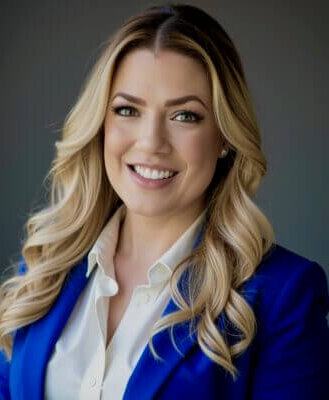
“I think the most common misconception is that people believe we’re dealing with forensic science — things like DNA, crime scenes and evidence, things like that,” said Azalia Martinez, MD, program director of the Forensic Psychiatry Fellowship. “While we do have a role in the criminal arena, it’s more about providing evaluation.”
For clinicians, forensic psychiatry differs from traditional psychiatry mainly in the role they play, Martinez explained. Traditional psychiatrists usually diagnose and treat patients. Forensic psychiatrists draw on that same medical training to understand mental illness, but their primary task in a legal case is to answer a specific question for the court, usually through a written report or testimony.
A growing need in jails and courts
The Forensic Psychiatry Fellowship program is part of a Texas effort to expand forensic psychiatry training through state funding. The program at the Long School of Medicine was among nine programs approved statewide to provide this specialty training.
“In Texas, part of the reason this grant funding exists is because many defendants have been waiting in jail to receive treatment,” Martinez said. “For years, the only treatment sites [for defendants] were state hospitals, so many people who were found incompetent to stand trial and needed treatment were often waiting long periods of time before receiving care.”
In recent years, there have been efforts to address that, with more treatment now being provided in jails with a focus on competency restoration.
“The jail and prison system is the largest provider of mental health services in our nation,” Martinez said. And while on-site treatment within the jail system has helped relieve some of the burden, Martinez emphasized that wait times remain high and there is still a tremendous need for psychiatrists trained in this field.
“Competency evaluations are really the bread and butter of this work. They’re very much needed, likely in other states as well, so building proficiency in that area is number one,” she said.
John Wilson, MD, assistant program director of the fellowship, worked to secure the state funding for the program, which was designed in 2024 and accredited through the Accreditation Council for Graduate Medical Education in 2025.
Wilson said the shortage of forensic psychiatrists has consequences for both public health and the justice system.
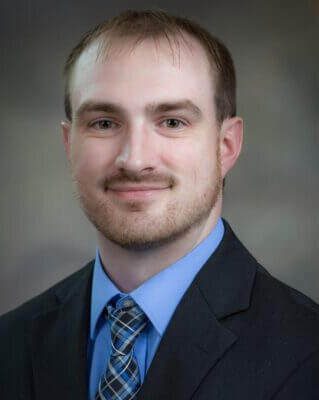
“These defendants who aren’t even convicted, innocent until proven guilty, they’re in the jail waiting for upwards of a year or more to even have a chance to go get treatment. So, they’re really in limbo during that time,” Wilson said.
He said the state allocated about $5 million over two years to support forensic psychiatry training statewide, creating an opportunity for programs to show how expanding the workforce can benefit patients, courts and communities by helping to reduce wait times and connect people with treatment sooner.
Training at the intersection of psychiatry and law
The Forensic Psychiatry Fellowship aims to address that shortage and build capacity by preparing physicians through immersive, supervised training.
The one-year fellowship offers training across criminal, civil, correctional and military forensic psychiatry. Fellows conduct court-ordered evaluations, assess a defendant’s competency to stand trial, provide care in detention settings and work alongside legal professionals to better understand how psychiatric expertise informs judicial decisions.
Much of the training focuses on competency evaluations for defendants who may be unable to understand court proceedings or assist their attorneys because of mental illness or intellectual disability. Fellows may also learn about evaluations related to insanity defenses, guardianship, personal injury and malpractice cases.
Because forensic psychiatry requires such specialized training, Martinez said one goal of the fellowship is to make the field more visible to future physicians.
“The hope is that, in addition to training fellows now, we serve as a presence in the institution so that exposure to forensic psychiatry can begin as early as medical school and residency, giving trainees a chance to see that option as a career path before they choose a subspecialty,” Martinez said.
Both Martinez and Wilson described forensic psychiatry as a flexible specialty. Some psychiatrists combine clinical practice with forensic evaluations, while others work in jails, outpatient restoration programs, state hospitals or academic settings.
“It’s really about trying to find the most appropriate setting to be able to provide care and treatment and then also safety — safety for that person, safety for the community,” Martinez said.
Learning the field through experience
The program’s first fellow, Steven Jimenez, DO, trained during the 2025-26 academic year and graduated in June 2026.
Jimenez was drawn to forensic psychiatry during residency, when he encountered patients with psychiatric illness who were also involved in legal proceedings, including individuals in jail settings who were awaiting competency restoration. Seeing how difficult and harmful jail environments can be for people with severe psychiatric illness helped solidify his interest in the field.
“It’s very common for our patients to get in trouble with the law, unfortunately. We as physicians can be very hesitant to get involved in any sort of capacity, so it kind of leaves a lot of these patients caught up in the system without support,” Jimenez said. “The jail setting is a very unfortunate place for someone with psychiatric illness, especially a severe one. I just saw what patients were struggling with, so that’s what drew me to apply for the fellowship.”
One major takeaway from the fellowship, Jimenez said, was learning to approach patients differently when serving as a court-appointed evaluator. Unlike a traditional treatment role, forensic evaluation requires objectivity, careful review of records and consideration of whether reported symptoms align with the broader evidence.
“As an evaluator designated by the court, we have to be more objective,” Jimenez said. “You still need to be able to connect to the patient and maintain the humanity but not take everything just at face value. We’re comparing it with the records we have and tying it into how the patient is presenting and what they’re struggling with. It’s like a puzzle. You’re looking at different pieces and trying to put it all together and come up with a reasonable conclusion,” he said.
Jimenez described the fellowship as intense but worthwhile. The volume and variety of evaluations felt almost like returning to medical school. He said the program offered strong supervision and mentorship, and uncommonly robust courtroom exposure. He testified about five or six times during the year, which he noted is more than many fellows experience in other programs.
The experience of testifying in court is nerve-wracking but rewarding, Jimenez said.
“It’s a lot of pressure. I’m not the best public speaker,” he admitted, “But getting those opportunities to testify helped me become more comfortable on the stand and more confident in my expertise … That experience made me stronger, not just as a forensic psychiatrist, but as a general psychiatrist,” Jimenez said.
For Martinez, Wilson and Jimenez, the fellowship represents more than a new training program. It is part of a broader effort in the community and across Texas to build a pipeline of forensic psychiatrists who can help reduce delays, improve evaluations and connect people with mental illness to appropriate care sooner.